ForceBeyond Logo
High-precision steel casting components and CNC finished structural parts

Carbon & Low-Alloy Steel Casting: High-Strength, Cost-Effective Precision

Carbon & Low-Alloy Steel Casting: High-Strength, Cost-Effective Precision

ForceBeyond is a premier global supplier of high-precision carbon and low-alloy steel castings. Offering an optimal balance of structural integrity, mechanical toughness, and cost-efficiency, carbon and alloy steels serve as the core backbone of modern industrial equipment.

Operating under an ISO 9001:2015 certified quality system, our foundry network produces mission-critical steel castings for automotive, heavy machinery, agricultural, and oil & gas applications. By leveraging lost-wax investment casting for tight-tolerance geometries and high-capacity sand casting for large structural elements, we supply fully machined, heat-treated, and coated components built strictly to engineering specifications.

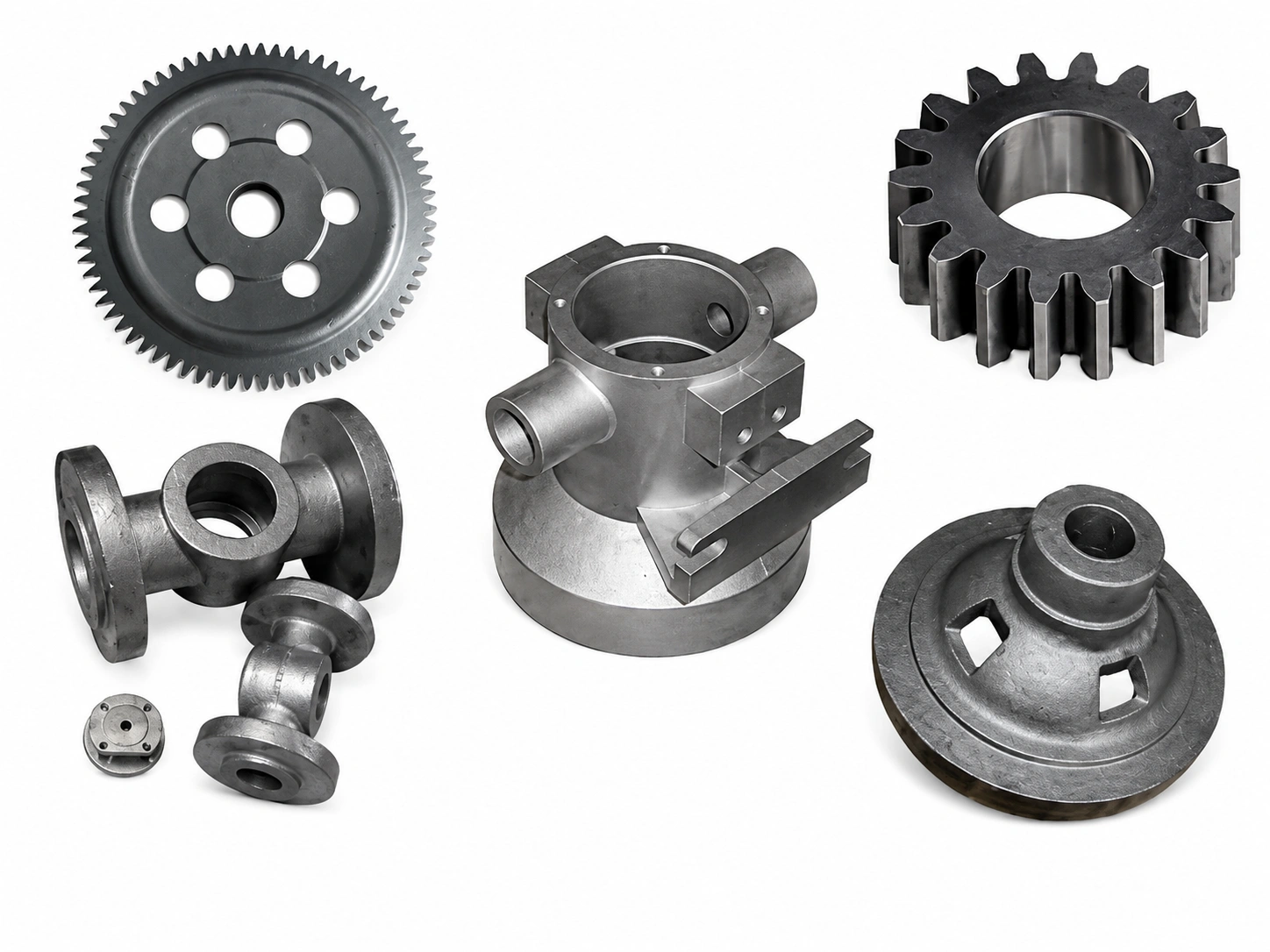
Custom carbon steel casting parts, including gears, valve bodies, housings, flanges, and industrial mechanical components on a white background.

Alloy Selection: Carbon Steel vs. Low-Alloy Steel Metallurgy

Selecting between plain carbon steels and low-alloy steels depends on the operating temperature, mechanical stress, and required wear resistance of the final component.

Category Parameter Carbon Cast Steel (e.g., WCB, 1020, 1045) Low-Alloy Cast Steel (e.g., 4140, 8620)
Primary Strengthening Mechanism Controlled Carbon Content (%) Chromium, Molybdenum, Nickel Additions
Hardenability & Heat Treatment Moderate Surface/Core Hardness Exceptional Deep Hardenability (Through-Hardening)
Weldability Profile Excellent (Low-Carbon WCB / 1020) Requires Pre-Heating & Post-Weld Stress Relief
Typical Mechanical Target General Structural Integrity & Weldability High Cyclic Fatigue, Shock Load, & Wear Resistance

Technical Specifications: Carbon & Low-Alloy Steel Grades

ForceBeyond pours a comprehensive range of carbon and low-alloy steels. By carefully controlling carbon equivalent numbers and alloying additions, we precisely dial in required yield strengths, core ductilities, and surface hardnesses.

Material Grade Classification Typical Yield Strength Key Features & Optimal Applications
WCB / WCC Mild Carbon Steel 36,000 psi (250 MPa) The industry standard for pressure-containing cast steel valves. Excellent weldability, ductility, and pressure-tightness.
AISI 1020 Low Carbon Steel 42,000 psi (290 MPa) Superior weldability and formability. Frequently specified for heavy structural brackets, motor frames, and mounting plates.
AISI 1045 Medium Carbon Steel 65,000 psi (450 MPa) Responds well to heat treatment for elevated strength and surface hardness. Ideal for heavy machinery linkages, gears, and structural supports.
AISI 4140 Low-Alloy (Chromoly) 95,000+ psi (Q&T) Formulated with chromium and molybdenum. Delivers exceptional fatigue resistance and impact toughness for severe-duty axles, shafts, and pinions.
AISI 8620 Low-Alloy Nickel-Chrom-Moly 55,000+ psi (Core) Engineered specifically for carburizing case-hardening. Generates a wear-resistant outer shell over a ductile shock-absorbing core. Excellent for heavy transmission gears.

Why Partner with ForceBeyond for Steel Casting?

While carbon steel is highly machinable, milling complex geometries from solid billet produces high material scrap rates and accelerated tool wear. ForceBeyond’s net-shape casting capabilities deliver a significantly more cost-effective alternative.

  • Near-Net-Shape Precision (Investment Casting): For intricate carbon and alloy steel parts, lost-wax investment casting holds ISO 8062 CT5–CT7 tolerances, cutting secondary CNC machining times dramatically.
  • Massive Scalability (Sand Casting): For large structural carbon steel components, our automated sand casting lines deliver rapid, economical production without expensive tooling barriers.
  • Strict Metallurgical Quality Control: Carbon and alloy steels require precise chemical composition control to react consistently during heat treatment. Spectrographic melt verification is performed on every furnace charge.

Tier-1.5 Integration: Cast, Machine & Heat-Treat Solutions

Unlike corrosion-resistant stainless steels, carbon and low-alloy steels require specialized post-cast thermal processing to unlock mechanical strength, alongside protective coatings to stop environmental oxidation. ForceBeyond operates a single-source Tier-1.5 workflow handling all secondary operations:

  • Advanced Heat Treatment: Precision Normalizing, Annealing, Quench & Tempering (Q&T), and Carburizing case hardening to meet strict tensile and hardness specs.
  • Precision CNC Machining: Integrated 5-axis milling, turning, and boring of datum faces, keyways, and critical bearing bores.
  • Surface Protection & Coating: In-house coating options including Zinc Plating, Black Oxide, Powder Coating, E-Coating, and rust-preventative oil treatments.
  • Non-Destructive Testing (NDT): Magnetic Particle Inspection (MPI) and Radiographic X-Ray testing to ensure zero subsurface defects in mission-critical parts.
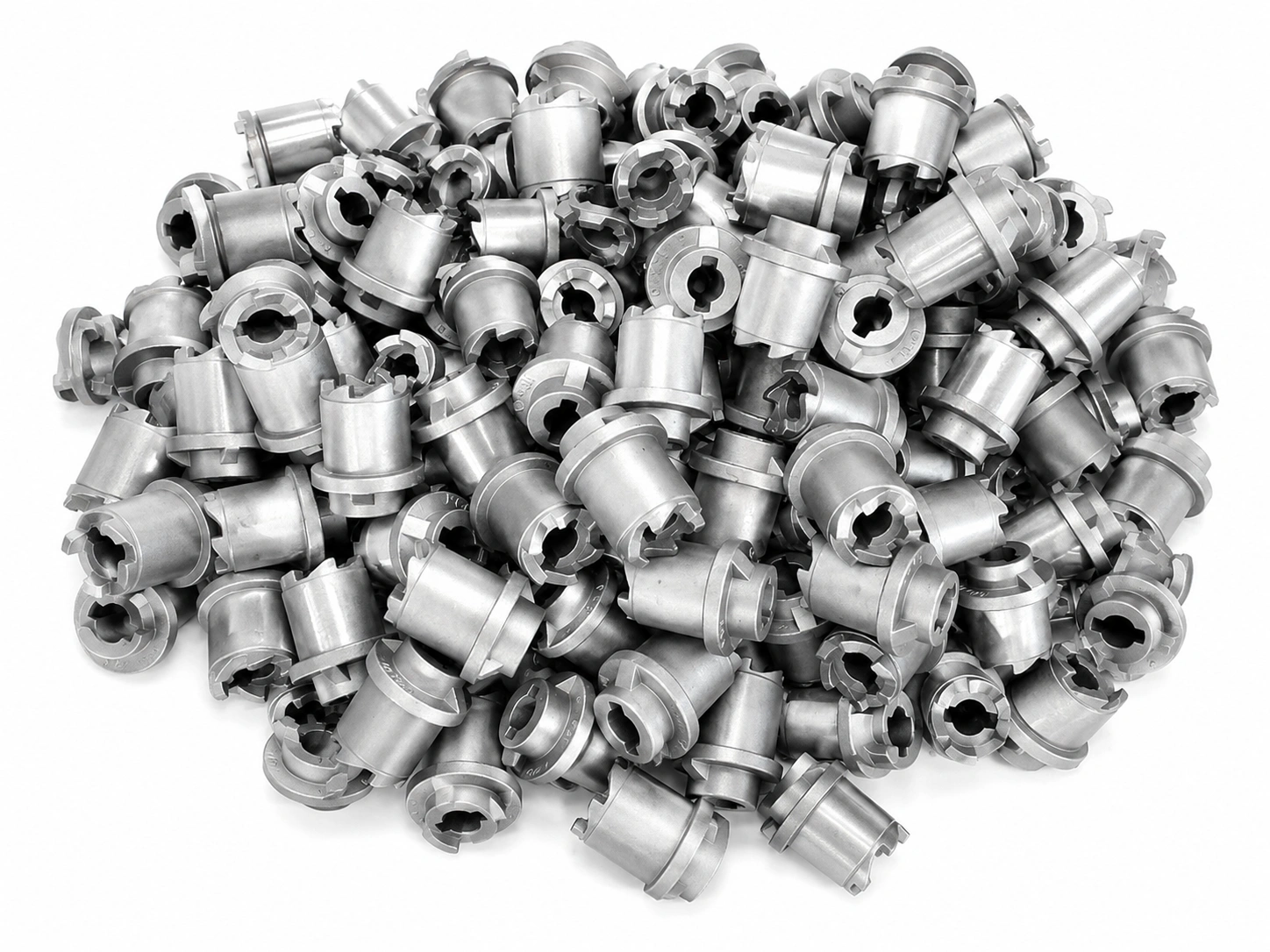
Bulk carbon steel cast components with keyed bores and precision-machined profiles for industrial manufacturing on a white background.

Certified Steel Casting Applications

Our qualified foundry network supplies heavy-duty, engineered steel castings across multiple industries:

  • Heavy Equipment & Mining: Excavator bucket teeth, track links, hydraulic mounts, and rigging hardware.
  • Automotive & Commercial Vehicles: Steering knuckles, axle housings, transmission components, and heavy hitches.
  • Oil, Gas & Fluid Power: High-pressure WCB valve bodies, companion flanges, and drilling equipment components.
  • Agricultural Machinery: Plow points, tractor linkage brackets, and heavy gearbox housings.

Frequently Asked Questions: Carbon & Low-Alloy Steel Casting

Is carbon steel cast using the Investment Casting (lost-wax) or Sand Casting process?

Both! The selection depends on part size, annual volume, and required tolerances. We utilize Investment Casting for smaller, highly complex steel parts where tight tolerances (ISO 8062 CT5–CT7), smooth surface finishes (125 RMS), and minimal CNC machining are required. Sand Casting is utilized for massive, heavy structural components where lower tooling investment and part size dominate.

What is the difference between Carbon Steel and Low-Alloy Steel?

Carbon steels (like WCB, 1020, or 1045) primarily rely on carbon content for basic strength and hardness. Low-alloy steels (like 4140 or 8620) incorporate additional elements—such as Chromium, Molybdenum, and Nickel—which dramatically increase hardenability, fatigue strength, and impact resistance under high cyclic loads.

Can cast carbon steel components be welded?

Yes, lower-carbon cast steels (like WCB and AISI 1020) exhibit excellent weldability and are frequently integrated into complex fabricated assemblies. Higher-carbon steels and low-alloy grades (like 4140) require controlled pre-heating and post-weld stress relieving to prevent heat-affected zone cracking.

Request a Quote for Carbon & Low-Alloy Steel Casting Services

Contact ForceBeyond’s engineering team to analyze your technical prints, select optimal steel alloys, and evaluate investment vs. sand casting options.

Sources

Our Internal Resources for Die Casting, Investment Casting, Forging and Sand Casting