

What is the difference between Solution Annealing and Age Hardening?
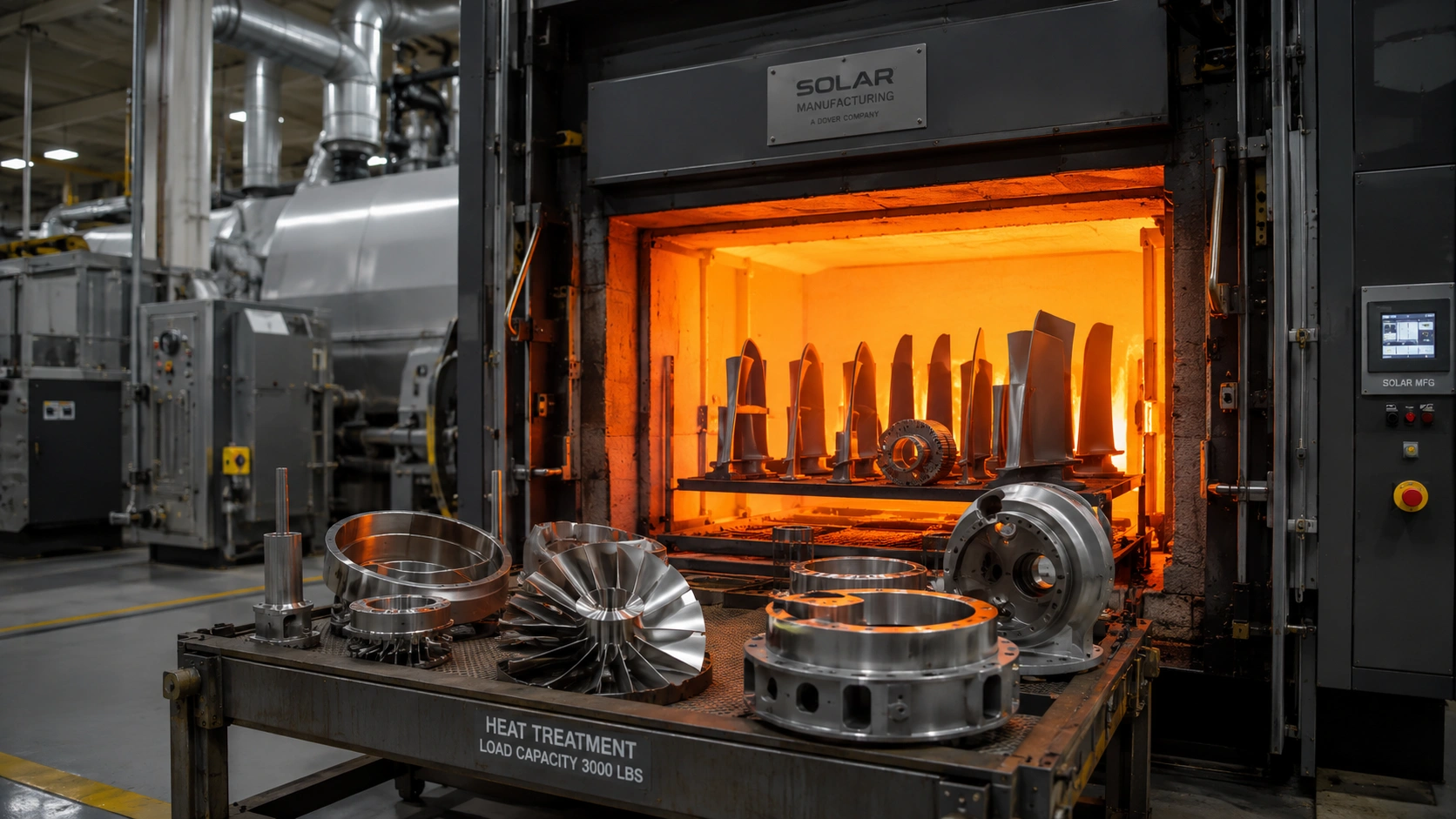
Solution Annealing heats the metal to a high temperature to dissolve all alloying elements into a homogenous solid solution, then rapidly quenches it to freeze those elements in place—resulting in a soft, ductile, and highly corrosion-resistant state (e.g., 17-4 PH Condition A). Age Hardening takes that solution-treated metal and re-heats it to a lower, controlled temperature for several hours. This causes microscopic particles (precipitates) to form within the grain structure, dramatically increasing the metal's hardness and yield strength (e.g., 17-4 PH Condition H900).