ForceBeyond Logo
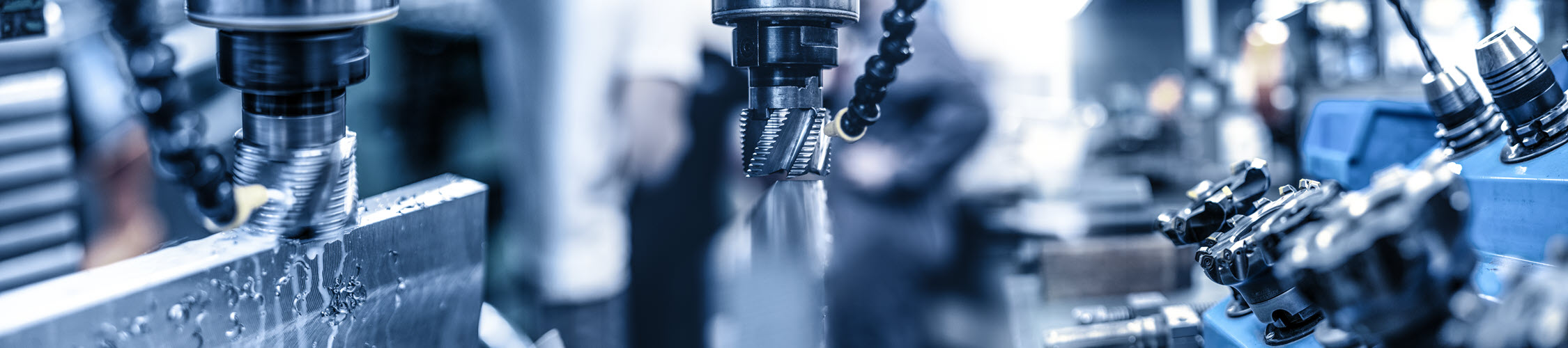
3D technical manufacturing process visualization and CAD simulation

Manufacturing Process Visualizations: 3D Technical Animations

Manufacturing Process Animations: 3D Technical Visualizations

Welcome to the ForceBeyond Interactive Media Center. Explore our high-definition 3D manufacturing process visualizations to see how engineered metal components transition from raw molten alloy to high-precision, assembly-ready hardware.

Understanding the mechanical nuances of primary metal forming—such as fluid dynamics in investment casting, grain flow alignment in closed-die forging, or densification during Hot Isostatic Pressing (HIP)—helps design engineers optimize parts for manufacturability (DFM), reduce unit weight, and lower total production costs.

3D Process Library: Primary Forming & Secondary Processing

Select a manufacturing discipline below to view the step-by-step 3D technical animation, metallurgical benefits, and target component applications.

1. Vacuum Investment Casting (Lost-Wax Process)

Process Overview: A precision wax pattern is injected, assembled onto a tree, and repeatedly dipped in a ceramic slurry to build a high-temperature shell. Once autoclaved to melt the wax, molten alloy is poured under high vacuum (VIM) into the rigid ceramic cavity.

Key Visual Takeaway: Watch how vacuum pouring eliminates atmospheric gas entrapment, yielding exceptionally smooth surface finishes (125 RMS) and thin-wall geometric capabilities (≤ 1.5mm).

Best For: Complex, organic shapes in high-temperature superalloys (Inconel 718, Hastelloy X, Titanium) for aerospace turbine vanes, medical implants, and valve bodies.

2. Closed-Die Hot Forging & Grain Flow Alignment

Process Overview: A heated metal billet is placed between custom-milled impression dies. High-tonnage hydraulic presses force the plasticized metal to fill the die cavity, reorienting the alloy's internal grain structure along the physical contours of the part.

Key Visual Takeaway: Note the continuous, unbroken directional grain flow lines. Unlike machining from bar stock—which cuts across grain lines—forging preserves structural integrity for maximum impact toughness and fatigue resistance.

Best For: Safety-critical, high-impact components like automotive axle shafts, mining bucket teeth, and aerospace landing gear linkages.

3. Hot Isostatic Pressing (HIP) & Void Elimination

Process Overview: Cast or 3D-printed metal components are sealed inside a high-pressure vessel and subjected to elevated temperatures (1,700°F–2,200°F) and uniform, multidirectional argon gas pressure (15,000+ psi).

Key Visual Takeaway: The animation illustrates the sub-microscopic collapse of internal shrinkage pores and gas voids. Under simultaneous heat and pressure, internal void walls diffusion-weld together, restoring 100% theoretical material density.

Best For: Eliminating microporosity in SMR nuclear valve bodies, jet engine turbine blades, and cobalt-chrome orthopedic implants.

4. 5-Axis Simultaneous CNC Milling & Live-Tool Turning

Process Overview: Advanced multi-axis machining centers manipulate the cutting tool and workpiece across five linear and rotational axes simultaneously, accessing intricate features in a single, unified setup.

Key Visual Takeaway: See how "Done-in-One" machining eliminates manual re-fixturing errors, holding sub-micron dimensional tolerances (± 0.0002") and true position alignment across complex 3D profiles.

Best For: Finishing near-net-shape castings, cutting high-density Duplex 2507 impellers, and machining micro-channel liquid cooling cold plates.

5. Automated Sand Molding (Green Sand vs. Resin No-Bake)

Process Overview: Automated molding machines compress high-purity sand and binder around a reusable pattern. Internal sand cores are set to form hollow internal fluid passages before liquid iron or steel is poured.

Key Visual Takeaway: Compare the high-speed cycle times of automated Green Sand molding (ideal for high-volume automotive parts) with the structural rigidity of Chemically Bonded Resin Sand (ideal for multi-ton heavy machinery castings).

Best For: Large-scale ductile iron engine blocks, pump volutes, agricultural frame brackets, and wind turbine hubs.

The Tier-1.5 Integration Advantage

In traditional manufacturing, managing separate vendors for casting, forging, heat treatment, and CNC machining creates severe quality gaps. ForceBeyond's Tier-1.5 Manufacturing Model unifies the entire post-forming value chain under a single ISO 9001:2015 and AS9100 Rev D quality umbrella:

[ 3D CAD Print ] ➔ [ Near-Net Forming ] ➔ [ Thermal HIP / Heat-Treat ] ➔ [ 5-Axis CNC Finish ] ➔ [ 100% NDT / CMM ]
  • Design for Manufacturability (DFM): Our engineering team reviews your 3D CAD prints to optimize wall transitions, draft angles, and machining allowances before tooling is cut.
  • Zero Dimensional Hand-Off Risk: We guarantee that raw castings and forgings fit perfectly into secondary CNC fixtures, eliminating vendor disputes over out-of-spec raw stock.
  • Single-Source Quality Assurance: Every process shown in our animations is certified with complete EN 10204 3.1 Material Test Reports (MTRs), CMM dimensional maps, and Non-Destructive Testing (NDT) sign-offs.

Manufacturing Process Video Animations

Explore our collection of 3D process animations demonstrating high-precision forming, void elimination, CNC machining, and automated molding.

1. Investment Casting Animation

3D visualization of lost-wax pattern injection, ceramic shell assembly, and precision vacuum investment alloy pouring.

2. Die Casting Animation

High-pressure injection molding process demonstrating rapid cycle times, tight tolerances, and net-shape aluminum components.

3. Permanent Mold Low Pressure Die Casting Animation

Controlled bottom-up filling dynamics eliminating turbulence and air entrapment in high-integrity aluminum alloys.

4. Permanent Mold Gravity Casting Animation

Reusable steel mold casting showing smooth metal feed, controlled directional cooling, and superior surface finish.

5. Cold Forging Animation

Ambient-temperature metal deformation yielding high yield strength, strain hardening, and zero material waste.

6. Hot Forging Animation

High-tonnage closed-die press forming optimizing internal grain flow and impact toughness for extreme-load parts.

7. Sand Casting Animation

Automated green sand molding and resin no-bake core placement for heavy-duty structural steel and iron castings.

Frequently Asked Questions: Process Animations & DFM

Why are 3D process animations helpful during the engineering RFQ stage?

Visualizing the manufacturing process allows engineering teams to identify potential DFM improvements—such as eliminating unnecessary machining passes, optimizing draft angles, or switching from solid bar stock machining to near-net investment casting to save material costs.

Can ForceBeyond provide custom DFM simulation models for our specific part prints?

Yes. During the project feasibility and APQP stages, we run advanced solidifying, mold-flow, and forging deformation computer simulations to predict thermal behavior, eliminate potential porosity, and optimize grain flow before cutting hard production tooling.

Are all manufacturing processes shown certified to aerospace and nuclear standards?

Yes. ForceBeyond operates co-owned facilities certified to AS9100 Rev D, ISO 9001:2015, and IATF 16949, adhering to strict NQA-1 and ASME Section III guidelines for safety-critical hardware.

Optimize Your Designs with ForceBeyond Engineering

Leverage our 3D process simulations, DFM analysis, and Tier-1.5 integrated manufacturing model to streamline production and cut component costs.

Sources

Our Internal Resources for Quality and Global Operations