ForceBeyond Logo
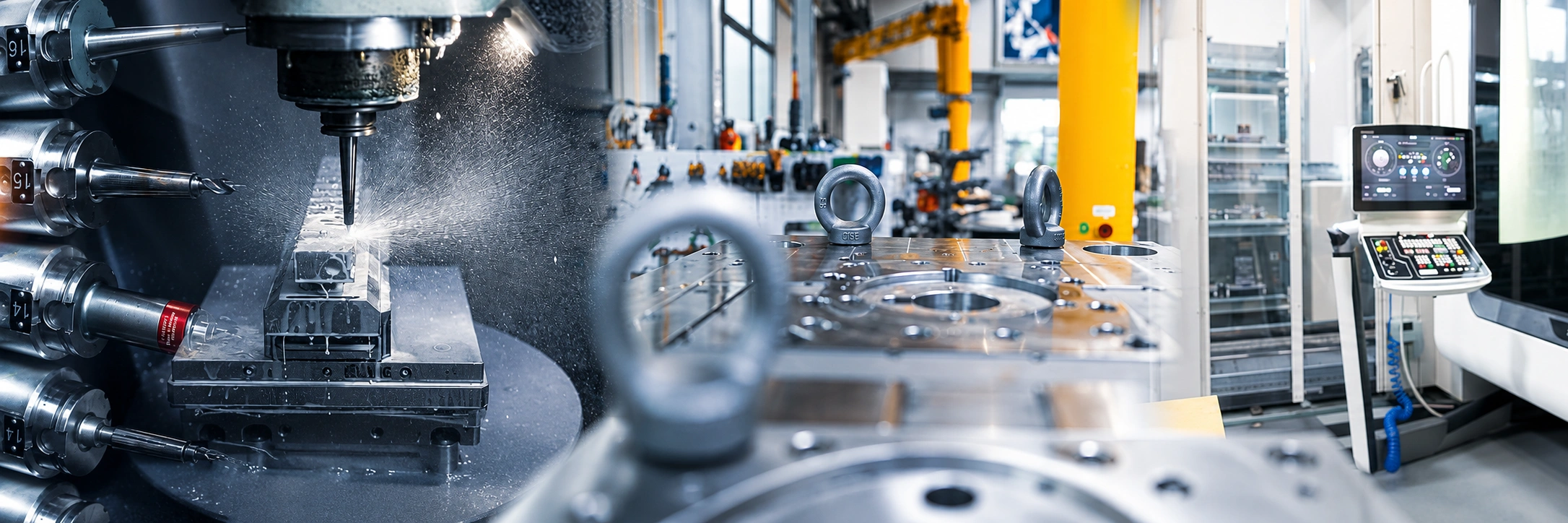
Precision CNC milling machine cutting a metal component in a modern manufacturing workshop with automated equipment and digital controls.

Materials & Alloy Technical Specifications

Materials & Technical Specifications: Engineered Metal Alloys

At ForceBeyond, material selection dictates component performance. Operating under strict ISO 9001:2015, AS9100 Rev D, and IATF 16949 quality systems, we pour, forge, and machine a broad spectrum of high-performance metals engineered to withstand severe thermal stress, extreme mechanical fatigue, and aggressive chemical environments.

Whether your application demands low-density structural titanium for aerospace airframes, high-nickel superalloys for SMR nuclear reactor loops, or corrosion-resistant duplex stainless steel for subsea petroleum extraction, ForceBeyond provides complete metallurgical validation from raw melt to final CMM inspection.


Complete Material Portfolio & Engineering Guides

Explore our detailed alloy specifications, mechanical properties, and process compatibility across our four core material families:

Alloy Category Key Material Grades Primary Performance Attributes Industry Applications
Superalloys & Exotic Metals Inconel 718/625, Hastelloy X, CoCrMo Extreme thermal creep resistance up to 1,800°F (980°C); immunity to hot corrosion and oxidation. Aerospace Turbines, SMR Nuclear, Medical Implants.
Titanium Alloys Ti-6Al-4V (Grade 5), Ti-6Al-4V ELI, Grade 2 High strength-to-weight ratio, excellent fatigue resistance, and non-magnetic biocompatibility. Flight Actuators, Deepwater Drilling, Surgical Tools.
Stainless & Carbon Steel 304/316L, 17-4 PH, Duplex 2205/2507, 4140 Superior pitting/crevice corrosion resistance, high tensile strength, and excellent wear resistance. Oil & Gas, Fluid Control, Mining Teeth.
Aluminum & Copper Alloys A356-T6, A380, ECO BRASS®, C11000 Copper Exceptional thermal/electrical conductivity, low density, and high pressure-tight castability. Data Center Power, EV Automotive, Busbars.

Integrated Metallurgical Integrity & Quality Verification

Managing raw metal stock requires strict quality governance. Every material processed under ForceBeyond’s Tier-1.5 Manufacturing Model undergoes comprehensive laboratory verification:

  • Certified Material Test Reports (MTRs): Full EN 10204 3.1 certification tracing chemical composition, tensile strength, yield strength, and elongation back to the original heat lot.
  • Positive Material Identification (PMI): X-ray fluorescence (XRF) and optical emission spectrometry (OES) ensure zero alloy mix-ups.
  • Phase Balance & Grain Structure Verification: Microstructural analysis to verify phase ratios (e.g., 50/50 ferrite-austenite in Duplex 2205) and freedom from harmful intermetallic precipitates.
  • Non-Destructive Testing (NDT): 100% Radiographic Testing (X-Ray per ASTM E192) and Fluorescent Penetrant Inspection (FPI per ASTM E1417) following Hot Isostatic Pressing (HIP).

Frequently Asked Questions

What certifications are provided with ForceBeyond's materials?

Every material processed receives Certified Material Test Reports (MTRs) with full EN 10204 3.1 certification tracing chemical composition, tensile strength, yield strength, and elongation back to the original heat lot.

How does ForceBeyond prevent alloy mix-ups during manufacturing?

We utilize Positive Material Identification (PMI) via X-ray fluorescence (XRF) and optical emission spectrometry (OES) to ensure zero alloy mix-ups across all processing stages.

Select the Optimal Alloy for Your Component

Partner with our metallurgical team for complete alloy validation, raw melt tracing, and precision material testing tailored to your application.

Sources

Our Internal Resources for Die Casting, Investment casting, Forging and Sand Casting