ForceBeyond Logo
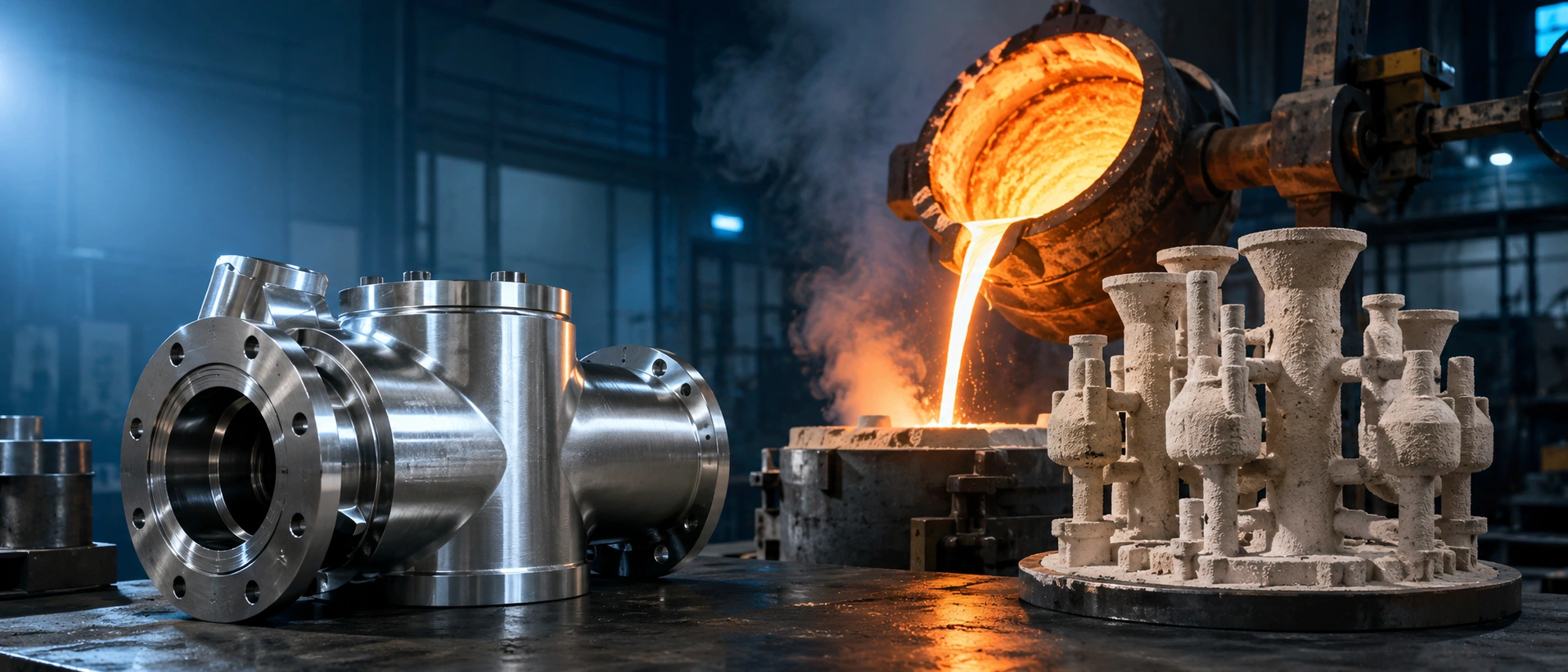
Stainless steel casting hero image showing a finished precision cast component, ceramic shell tree, and molten metal pouring in a modern foundry

Stainless Steel Casting Services: Custom High-Precision Components

Precision Stainless Steel Casting: Corrosion-Resistant Manufacturing

ForceBeyond is a trusted global partner for high-precision stainless steel casting solutions. Utilizing lost-wax investment casting, we manufacture complex, near-net-shape components that deliver outstanding corrosion resistance, temperature durability, and structural strength.

Operating under an ISO 9001:2015 certified quality framework, our dual-shore stainless steel foundry network produces custom components ranging from fractions of an ounce up to 200 pounds. From sanitary food processing fittings to high-pressure marine pumps and aerospace valves, we deliver fully machined, passivated, and ready-to-assemble stainless steel castings engineered for demanding environments.

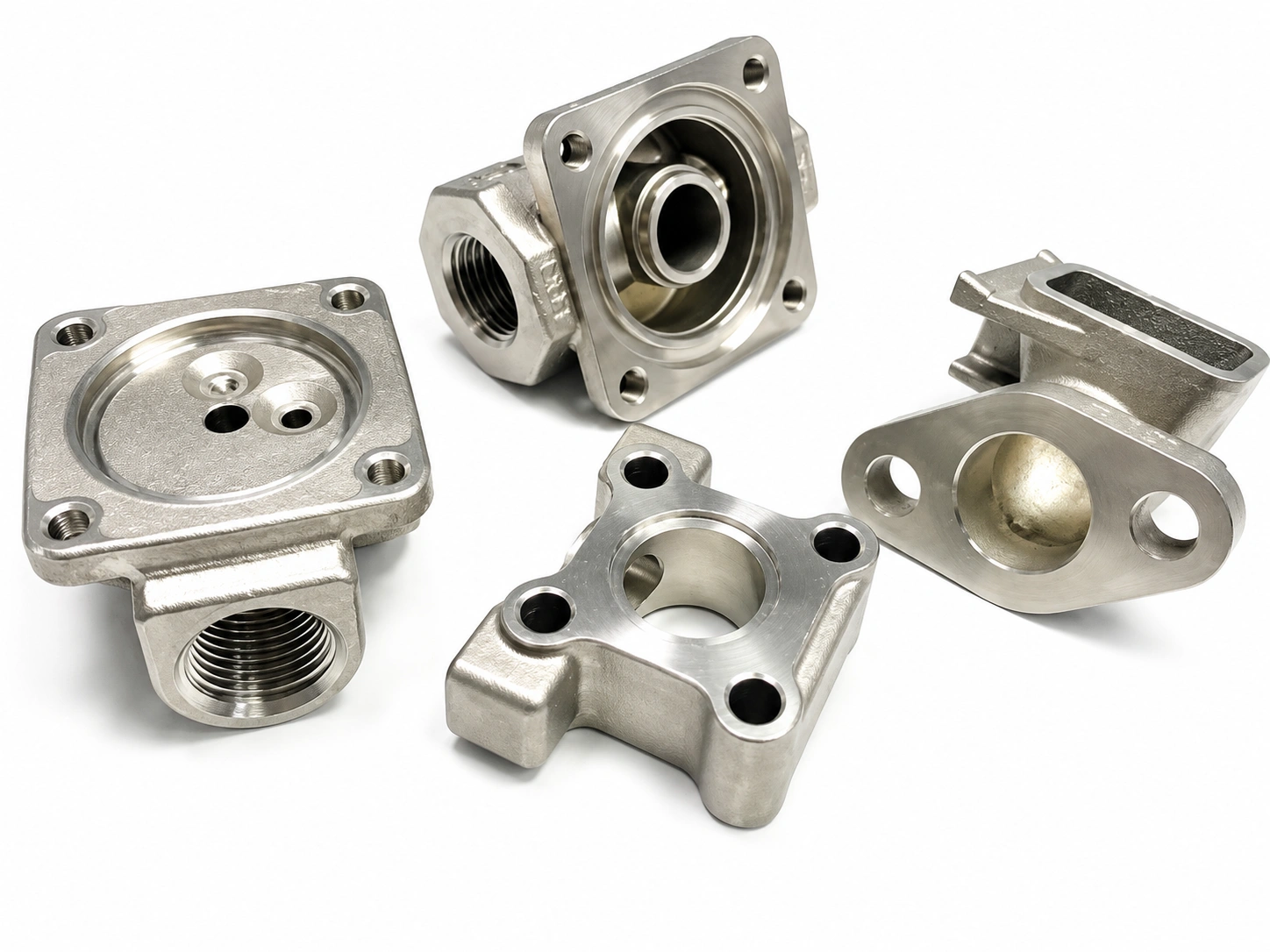
Precision stainless steel casting parts including machined valve bodies, threaded pipe fittings, mounting flanges, and industrial housings.

Stainless Steel Casting Material Alloys & Technical Specifications

Successful stainless steel casting relies on strict metallurgical control. ForceBeyond pours austenitic, martensitic, ferritic, and precipitation-hardening (PH) stainless steel grades tailored to match your precise mechanical and chemical performance targets.

Stainless Steel Casting Grade Typical Tensile Strength Typical Yield Strength Key Alloy Characteristics & Ideal Applications
304 / 304L Stainless Steel 75,000 psi (515 MPa) 30,000 psi (205 MPa) Standard 18/8 austenitic alloy. Excellent general corrosion resistance and weldability for commercial plumbing, food processing, and medical devices.
316 / 316L Stainless Steel 70,000 psi (485 MPa) 25,000 psi (170 MPa) Molybdenum-alloyed austenitic steel. Superior resistance to chloride pitting, making it essential for marine hardware, chemical fluid control, and water treatment.
17-4 PH Stainless Steel Up to 150,000+ psi (Condition H900) Up to 130,000+ psi Precipitation-hardening alloy combining 304-level corrosion resistance with exceptional tensile strength and hardness. Ideal for aerospace brackets, pump shafts, and high-pressure oil & gas components.
410 / 416 Stainless Steel 70,000+ psi (Annealed) 40,000+ psi Martensitic stainless grades heat-treated for elevated mechanical strength and wear resistance. Preferred for industrial valve trims, cutlery, and hardware.
430 Stainless Steel 65,000 psi (450 MPa) 30,000 psi (205 MPa) Ferritic grade offering good thermal oxidation and atmospheric corrosion resistance. Frequently selected for decorative hardware and automotive trim.

Note: For severe chloride environments requiring extreme resistance to stress-corrosion cracking, review our specialized Duplex & Super Duplex Stainless Steel Casting solutions.


Why Choose Investment Casting for Stainless Steel Parts?

Machining complex parts from solid stainless steel bar stock is notoriously tough on tooling, waste-heavy, and time-consuming. Precision stainless steel investment casting offers clear advantages over standard sand casting, heavy forging, or complete CNC milling:

  • Complex Internal Geometries: Sacrificial wax pattern assembly allows for internal fluid passages, thin wall sections, and intricate undercut features that are impossible or cost-prohibitive to machine.
  • Near-Net-Shape Accuracy: Holding tight ISO 8062 CT5 to CT7 tolerances dramatically decreases the volume of secondary CNC metal removal required on tough, work-hardening alloys.
  • Superior As-Cast Surface Finish: Ceramic shell molding provides smooth surface finishes (typically 125 RMS or smoother), cutting down processing times for parts requiring mirror polishing or sanitary finishing.
  • Lower Material Scrap Costs: Stainless steel alloys are expensive. Investment casting deposits molten metal only where needed, reducing scrap loss and driving down per-unit manufacturing costs on production volumes.

Tier-1.5 Integration: Single-Source Stainless Steel Casting & Machining

Because high-performance applications demand strict sealing surfaces and clean finishes, ForceBeyond offers full Tier-1.5 single-source integration, taking your project from raw stainless steel casting to finished assembly:

  • Precision CNC Machining: Integrated 5-axis milling, turning, and thread tapping for critical mating faces, tight-tolerance bores, and high-pressure sealing ports.
  • Chemical Passivation & Electropolishing: Passivation baths eliminate surface iron contaminants, restoring the essential chromium-oxide layer. Electropolishing provides ultra-clean, sanitary surfaces for medical and pharmaceutical components.
  • Specialized Heat Treatment: Solution annealing optimizes corrosion resistance, while controlled age-hardening (H900, H1150) optimizes the strength of 17-4 PH components.
  • Non-Destructive Testing (NDT): 100% Radiographic Inspection (X-Ray) and Liquid Penetrant Testing (PT/FPI) verify total internal density and surface integrity.

Industries & Applications for Custom Stainless Steel Castings

Our global manufacturing infrastructure delivers certified stainless steel castings across critical industrial sectors:

  • Fluid Handling & Valves: High-pressure valve bodies, ball valves, pump impellers, strainers, and heavy-duty pipe fittings.
  • Food Processing & Sanitary Equipment: FDA-compliant sanitary fluid connectors, mixing impellers, and bottling machine components.
  • Marine & Offshore Components: Corrosion-resistant cleats, deck fittings, hinges, pump housings, and subsea instrument enclosures built with 316L.
  • Medical & Surgical Instruments: Orthopedic trial instruments, specialized surgical tools, and structural device brackets requiring autoclave durability.

Frequently Asked Questions: Stainless Steel Casting Services

What is the difference between 304 and 316 stainless steel casting?

While both are highly corrosion-resistant austenitic alloys, 316 stainless steel includes molybdenum. This addition drastically increases resistance to pitting and crevice corrosion in chloride and marine environments. If your stainless steel casting is deployed in saltwater or harsh industrial chemical processing, 316 or 316L is the recommended standard.

Why do custom stainless steel castings require chemical passivation?

During the stainless steel casting process and post-pour CNC machining, free iron particles can deposit on the surface. Passivation uses a specialized acid bath (citric or nitric) to remove free iron and accelerate the formation of a natural, corrosion-resistant chromium-oxide passive layer.

Can ForceBeyond pour 17-4 PH high-strength stainless steel castings?

Yes. 17-4 PH precipitation-hardening stainless steel casting is one of our primary core offerings. It combines the superior corrosion resistance of 304 austenitic steel with thermal heat-treatability, reaching tensile strengths up to 150,000+ psi for demanding aerospace and fluid control components.

Request a Quote for Stainless Steel Casting Services

Partner with ForceBeyond for custom stainless steel investment casting. Submit your engineering drawings for rapid quote analysis and manufacturing feasibility feedback.

Sources

Our Internal Resources for Die Casting, Investment casting, Forging and Sand Casting