
What is the maximum part size for investment casting?
Our standard investment casting envelope accommodates parts up to 24 x 24 x 24 inches. For larger components, we typically recommend our sand casting process.

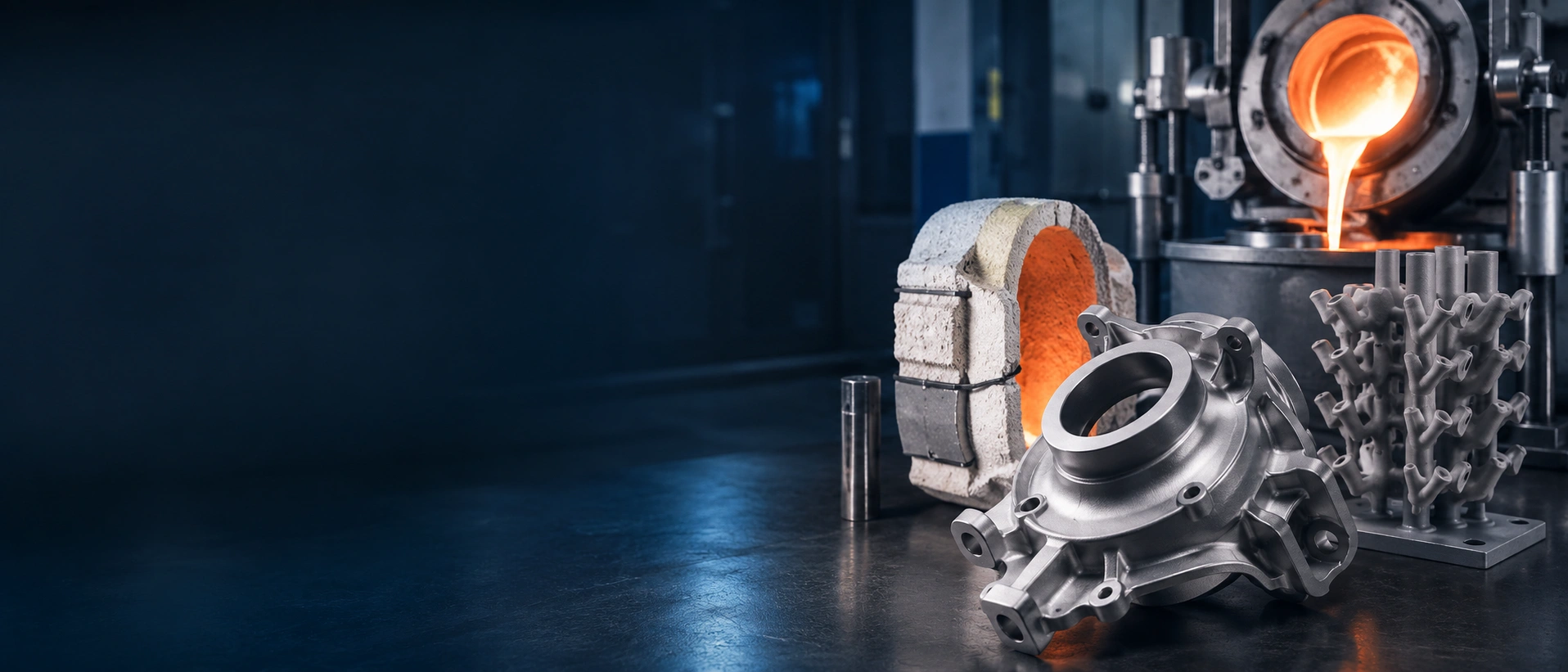
ForceBeyond specializes in high-precision Titanium Investment Casting (Lost Wax), delivering complex, near-net-shape components with superior surface finishes. Utilizing Vacuum Induction Melting (VIM) at our AS9100-certified facilities, we produce intricate geometries with wall thicknesses as low as 0.060 inches (1.5mm). Our integrated Tier-1.5 oversight ensures that every investment cast part reaches ±0.005 inches per inch tolerances, minimizing the need for costly secondary machining.
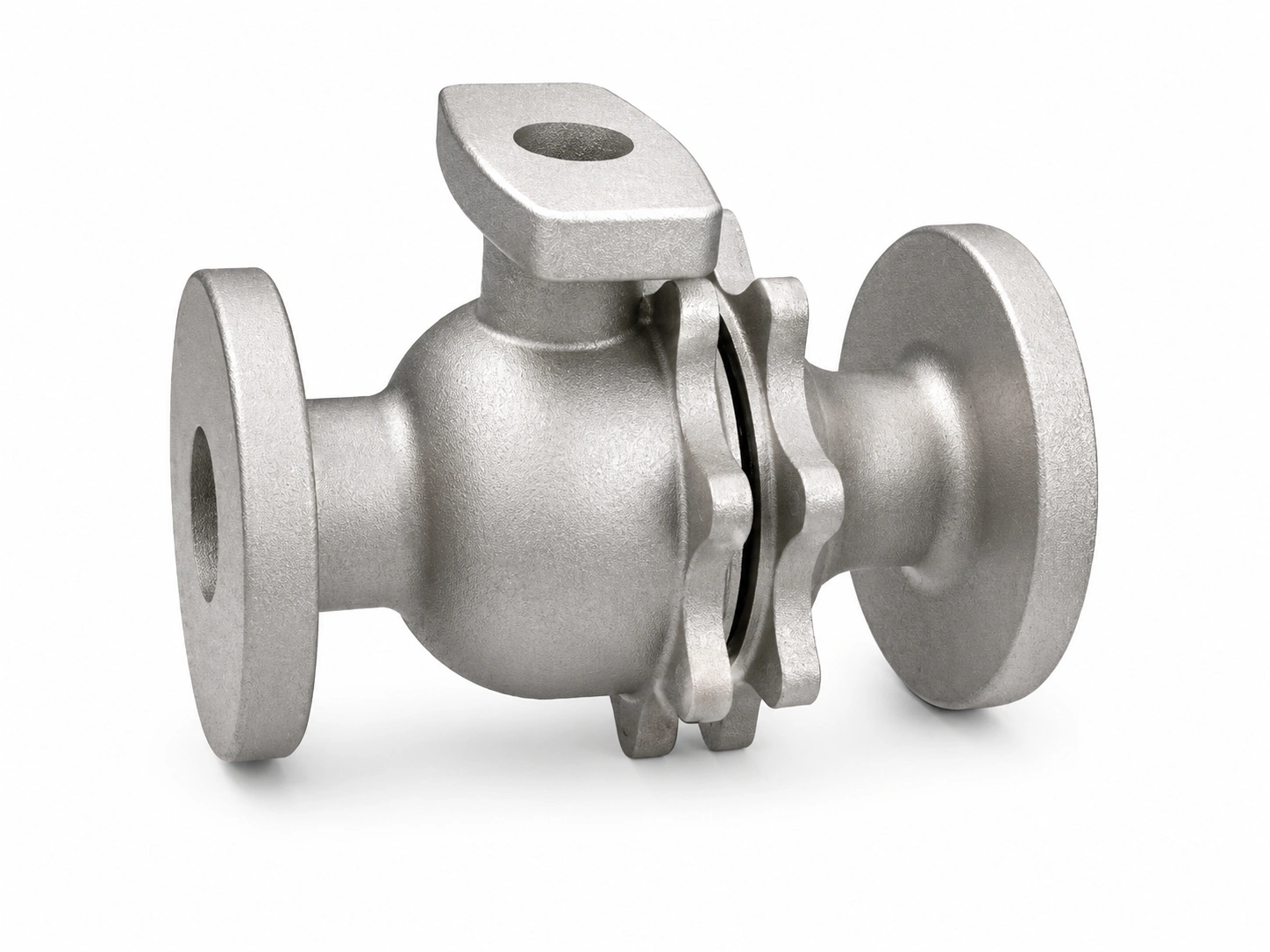
We specialize in components where geometric complexity makes forging or machining from solid billet cost-prohibitive. Our co-owned AS9100 facilities ensure total traceability for every flight-critical part.
Our Tier-1.5 oversight ensures that every component passes the most stringent nondestructive testing (NDT) protocols required by global aerospace primes and defense contractors.
| Standard | Description | Application |
|---|---|---|
| AMS 4991 | Titanium Alloy Castings (6Al-4V) | Primary aerospace investment casting spec. |
| ASTM B367 | Titanium & Titanium Alloy Castings | General engineering and industrial aerospace. |
| AMS 2175 | Classification of Castings | Standard for radiographic and visual inspection levels. |
ForceBeyond provides the technical flexibility to pivot between manufacturing methods based on your project’s lifecycle and structural requirements.
All aerospace castings are finished in our co-owned CNC centers to achieve the plus or minus 0.005mm tolerances required for mating surfaces. This integrated “Cast-to-Finish” approach reduces supply chain risk.
For structural parts experiencing extreme unidirectional stress (like wing spars), our Titanium Forging Hub provides the directional grain flow required for maximum fatigue life.
Streamline Your Aerospace Supply Chain with Direct Tier-1.5 Oversight.
Please provide the following for our engineering review:
Our standard investment casting envelope accommodates parts up to 24 x 24 x 24 inches. For larger components, we typically recommend our sand casting process.
While very coarse threads can sometimes be cast, we recommend casting the “tap hole” to a near-net size and performing final threading in our Titanium Machining centers to ensure class-3 fit tolerances.
Yes. Using Ti-6Al-4V ELI (Grade 23) and vacuum induction melting, we produce biocompatible orthopedic and trauma components that meet stringent medical-grade requirements.